
Build vs. buy for customer intelligence: a scorecard
When building your own customer feedback pipeline is right, the five signals you have outgrown it, and a scorecard for build vs buy.
Every product team with an engineer and a Claude subscription eventually asks the same question: should we keep building our own customer feedback pipeline, or buy one?
Most articles on this topic are written by vendors, and most of them say the same thing: buy. This one is also written by a vendor, so we will try to be useful instead. Our honest answer is that building is often right at the start, there are clear signals when it stops being right, and the best outcome for most teams is neither pure build nor pure buy. Buy the layer, keep your build.
”Buy the layer, keep your build.”
When building is right
Building your own setup is a good call when:
- One person is the main user. A product lead or researcher who knows exactly what to ask, and knows the sources by heart.
- You have a few sources and modest volume. A couple of call recorders, a support inbox, a few dozen conversations a month.
- The questions are mostly lookups. “What did this customer say about pricing?” rather than “how many customers want this, and what are they worth?”
- You enjoy maintaining it. Someone on the team wants to own the prompts, the connectors and the fixes.
In those conditions a homegrown setup is fast to stand up, costs almost nothing and fits your workflow exactly. Plenty of teams are here. In our Build vs Buy research, about 60% of the product teams we spoke with had some homegrown equivalent already.
Five signals you have outgrown it
The same research showed a consistent set of early signals that a build has stopped keeping up. If two or more of these are true, it is time to look again.
- Volume. You handle thousands of tickets a month (5,000 or more is a common tipping point) or hundreds of call transcripts. Past what fits in a context window, answers come from a sample, and nothing tells you which sample.
- Sources. Signal lives in five or more places: call recorders, support, chat, CRM notes, community, sales emails. Each new connector is another thing to maintain.
- Non-builders need answers. Sales, CS and leadership want to ask their own questions. If every answer still goes through the person who built the setup, it is a queue, not a system.
- Counting matters. Roadmap reviews now ask “how many customers asked for this, and what are they worth?” Retrieval can show examples. It cannot count distinct customers across every conversation.
- The builder moved on. The person who built it changed teams, got busy or left. Nobody else knows how it works, and it is quietly getting staler.

The scorecard
Score your current setup against what you need. We have been honest about where building wins.
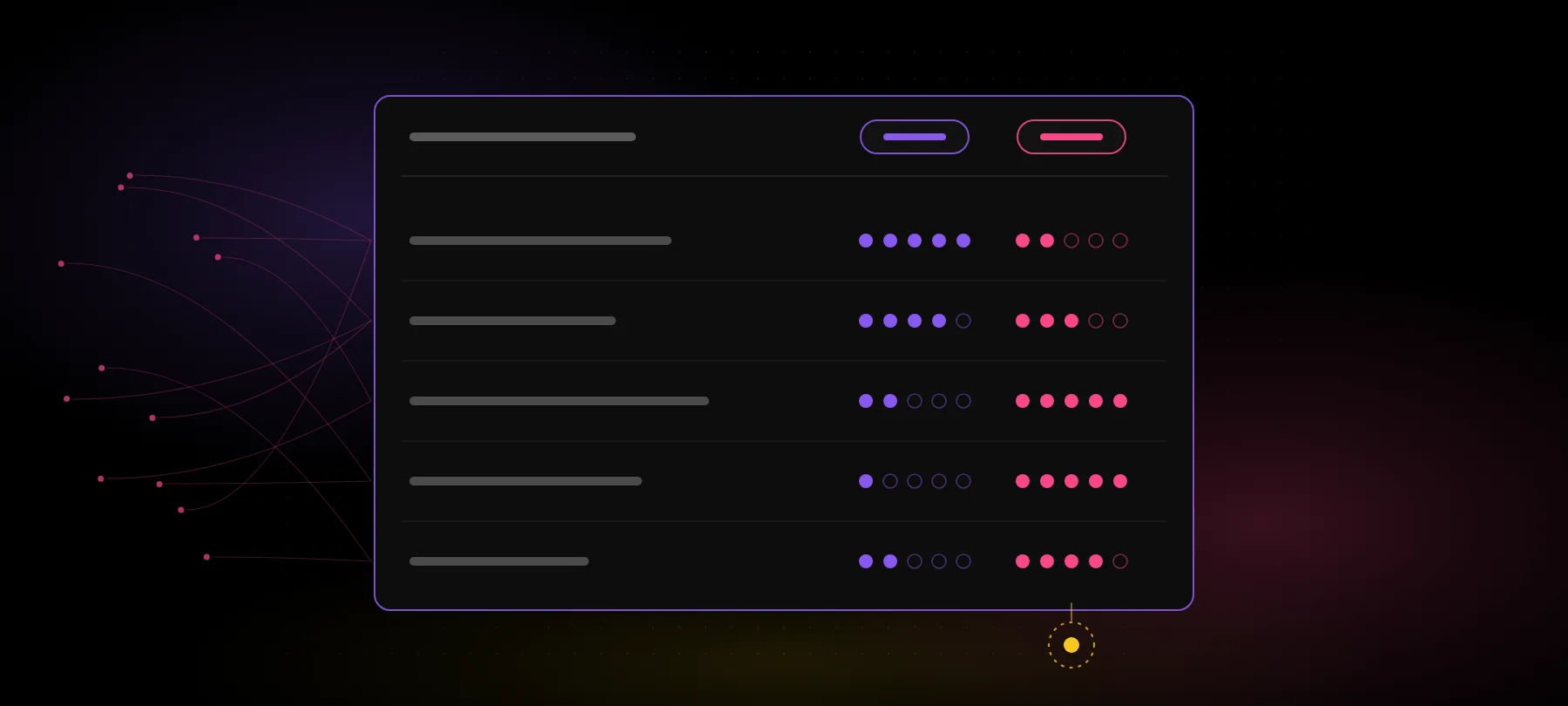
| Criterion | Homegrown build | Bought customer intelligence layer |
|---|---|---|
| ⏰ Time to first answer | Minutes. Point Claude at a folder and ask. | An hour. Connect sources and let the first backlog process. |
| 🧩 Fit to your workflow | Exact. You built it for yourself. | Close. You adapt some views and terms. |
| 📈 Scale | Bounded by the context window at question time | Every conversation processed as it arrives |
| 🔢 Counting and value | Examples, not counts | Distinct customers per need, joined to account value |
| 🔗 Citations | Depends on your prompts. Easy to lose. | A citation on every claim, down to the quote |
| 👥 Use by non-builders | Hard. You have to know what to ask. | Shared workspace, plus access from their own AI tools |
| 🛠️ Maintenance | Yours, forever | The vendor’s job |
| 💰 Cost | Low cash, ongoing engineering time | A subscription, little engineering time |
If your column on the left is winning on what you actually need, keep building. If the right column is winning on scale, counting or non-builder use, read on.
What “additive” looks like in practice
The teams we see succeed do not tear out their build. They keep the part that works and add the part that is missing.
- Keep your interface. If your team lives in Claude, Cursor or a custom tool, stay there. The intelligence layer connects to it over MCP, so the same prompts now reach every conversation instead of a sample.
- Move the heavy lifting underneath. Pre-processing, clustering, counting and citations run continuously in the layer, not at question time in a chat window.
- Give everyone else a front door. Sales, CS and leadership get a shared workspace with the same evidence, so they stop routing questions through the builder.
- Retire the brittle parts. Connectors and pipelines you were patching every few weeks become someone else’s problem.
The builder keeps the setup they are proud of. The rest of the company gets answers with numbers and sources. Nobody has to win the build vs buy argument.
”Nobody has to win the build vs buy argument.”
A note on vendor claims
You will see big numbers in this category: hundreds of thousands of conversations analyzed, accuracy benchmarks, “insights” counts. Scale claims are easy to make and hard to compare. When you evaluate any vendor, including us, ask for three things on your own data:
- A count of distinct customers behind one need you already know well.
- The citations for that count, so you can check a few by hand.
- An answer to that question from someone who is not the person running the trial.
If the count matches what you know, the citations hold up and the non-builder gets a useful answer, the tool is doing its job.
Want to run that test on your own customer data? Book a demo and bring a need your team is debating.
FAQ
Should we build or buy customer feedback analysis? Build when one person uses it, sources are few and questions are lookups. Buy a layer when volume, source count, non-builder users or the need to count customers outgrow the build. Many teams keep their build and add a layer.
What are the signs a homegrown feedback pipeline has been outgrown? Thousands of tickets or hundreds of transcripts, five or more sources, non-builders needing answers, a need for counts and revenue, and the original builder no longer maintaining it.
Can I keep my Claude setup and add a customer intelligence tool? Yes. A layer that processes every conversation can connect to Claude and other AI tools over MCP, so your existing setup gets counts and citations without being replaced.