
What It Takes to Build a Cognitive Layer for Customer Voice In-House
A field guide to why "we'll just build this in-house" is harder than it sounds.
TL;DR - the layman’s version
Heads up: the rest of this post gets fairly technical. Here’s the plain-English version first.
- Evermuse looks simple: calls in, insights out. Teams regularly assume they could rebuild it in a week. The demo is easy - you can wire a transcript to an AI and get something impressive in an hour.
- The hard part is everything that doesn’t fit in a demo. A system that quietly gets smarter as more customer conversations pile up, never loses the thread from an insight back to the exact sentence a customer said, and can be trusted to answer strategy questions without making things up.
- It has to keep three things separate: what customers said (evidence), what your company already decided (guidance), and background context. Blend them and the system will “discover” that customers want exactly what your execs already planned to build.
- Most people never open the app - they ask questions inside Claude or ChatGPT. When the answer shows up in a chat you don’t control, being “approximately right” isn’t a UI blemish; it’s an AI confidently making things up about your customers.
- Every claim is one click from proof. Each insight links straight back to the moment in the transcript it came from, so a human can always verify it. Getting that right on a stateless AI-facing surface is genuinely hard, and it’s the thing most in-house builds skip.
- The value compounds. Understanding grows with every conversation instead of being re-generated from scratch each time. That only works if the system was built correctly the whole time - the moat isn’t the code, it’s the years of correctly-tagged, fully-cited understanding.
- Build vs. buy really comes down to one cost you can’t recover: engineering time is replaceable, but last quarter’s customer conversations aren’t. Every month your evidence runs through a half-right pipeline, you’re building a corpus you’ll eventually have to distrust - and you can’t re-run those calls.
Every few weeks a team looks at Evermuse and reaches the same conclusion: this is just call transcripts in, insights out - we could build it in a sprint. Pipe your calls into an LLM, ask it for the needs and pain points, dump them in a table, maybe cluster them. How hard can it be?
The demo is easy. The demo is always easy. You can wire a transcript to a prompt in an hour and get something that looks like magic in a meeting.
What’s hard is the part that doesn’t fit in a demo: the system that keeps getting smarter as evidence accumulates, that never loses the thread from a claim back to the sentence a customer actually said, that can be trusted to answer a strategy question inside Claude or ChatGPT without making things up, and that does all of this while quietly defending against malformed uploads, leaked PII, runaway costs, and the thousand ways a continuously-learning pipeline can silently corrupt itself.
Evermuse is not a transcript summarizer. It is a cognitive layer of customer voice - a system whose entire job is to accumulate understanding over time and make that understanding queryable, verifiable, and actionable. This article walks through what’s actually inside that layer and explains where the difficulty lives. Not to discourage you from building it - but so that if you do, you know what you’re signing up for.
One framing note before we start. Most people will never open the Evermuse web app. They’ll consume it through MCP, inside Claude or ChatGPT - asking “what are customers saying about onboarding?” and getting an answer with citations they can click. That single fact reorders every backend priority. When the surface is a chat client you don’t control, being approximately right isn’t a UX blemish - it’s a system that hallucinates authoritatively about your customers. So we’ll spend the most time on the two things that reframing makes non-negotiable: the ingestion/tagging that decides what a piece of evidence even is, and the citation layer that lets a human verify every claim.
1. Ingestion and cognitive tagging: the problem isn’t parsing, it’s provenance

The naive version: accept a transcript, store the text, move on.
What it actually takes: decide, for every single piece of incoming information, what kind of thing it is - and get that decision right, because everything downstream depends on it.
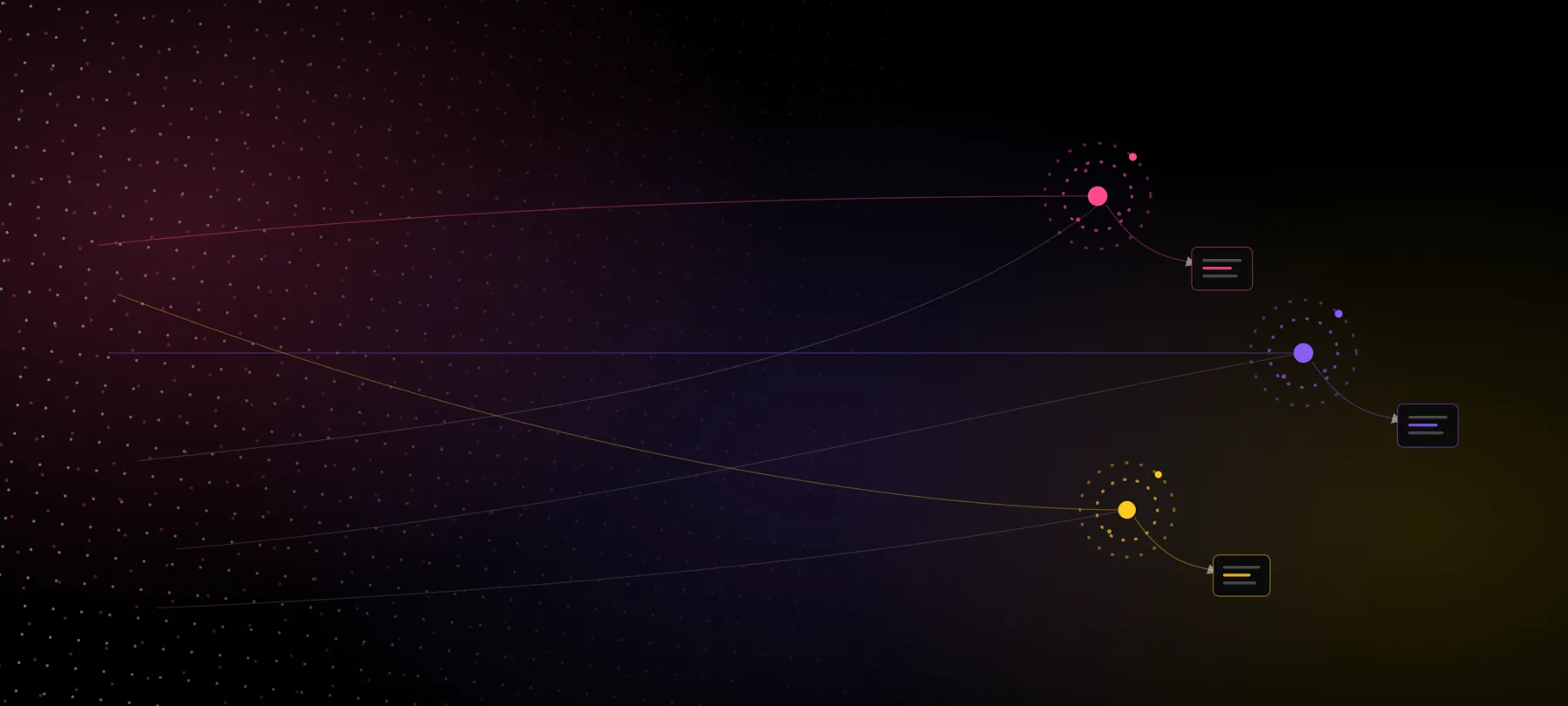
Here’s the distinction that turns out to be load-bearing. A sentence in a customer call (“I wish this synced with Notion”) is evidence. A line in your internal strategy doc (“we’re prioritizing enterprise this quarter”) is guidance. A market report you uploaded for background is context. These are three fundamentally different epistemic categories, and a system that blends them is worse than useless - it will “discover” that your customers want exactly what your executives already decided to build, because it can’t tell the customer’s voice from your own.
Evermuse encodes this as a first-class classification stamped onto every source at the moment of ingestion. Whatever the input - a meeting bot, a pasted call transcript, an in-app document upload, a research note, a push from an external automation - everything is normalized into one canonical internal shape before anything else happens, and the very first thing that shape carries is its provenance.
And the pipeline branches hard on it. Only evidence gets run through signal extraction and problem detection. Guidance and context skip extraction entirely but still converge on the same terminal state, so the rest of the system sees one uniform contract. This is the difference between a system that knows it’s reading the company’s own objectives versus a customer’s words - and it’s a decision that has to be made correctly at ingestion, before a single insight is generated, because you cannot retroactively un-blend evidence and guidance once they’re in the same pile.
Why it’s harder than it looks:
- Provenance can’t be spoofed. When a source arrives through the Evermuse public ingest API, the server stamps its true origin onto every record before validation ever runs - clients can’t claim their data came from somewhere it didn’t. A small amount of code standing in for a real trust boundary.
- The same classification exists at two altitudes. Provenance lives on the source, but individual signal types can carry their own provenance rules that override it. An internal “company objectives” signal is still guidance even when it’s extracted from an evidence-tagged customer call. Designing the source-level and signal-level classifications so they compose cleanly - instead of contradicting each other in edge cases - is the kind of modeling decision that looks trivial in a diagram and takes weeks to get right in practice.
- The contract is strict, and reality isn’t. The ingestion boundary rejects unknown shapes outright - and it also carries validators whose entire job is to catch specific real-world failures. One example: transcripts that no-code automation tools forward as serialized binary rather than readable text. If you don’t catch that at the edge, it normalizes to zero usable text, gets accepted, gets billed, and silently strands. Every one of these guards is a scar from a production incident you haven’t had yet.
The naive version handles the happy path. The real version is 80% edge cases, and each edge case is a place where the system could quietly start lying to you about your customers.
2. Signal extraction at scale: idempotency is the whole game
The naive version: send the ticket, transcript, or Slack thread to an LLM, ask for needs and quotes, save the JSON.
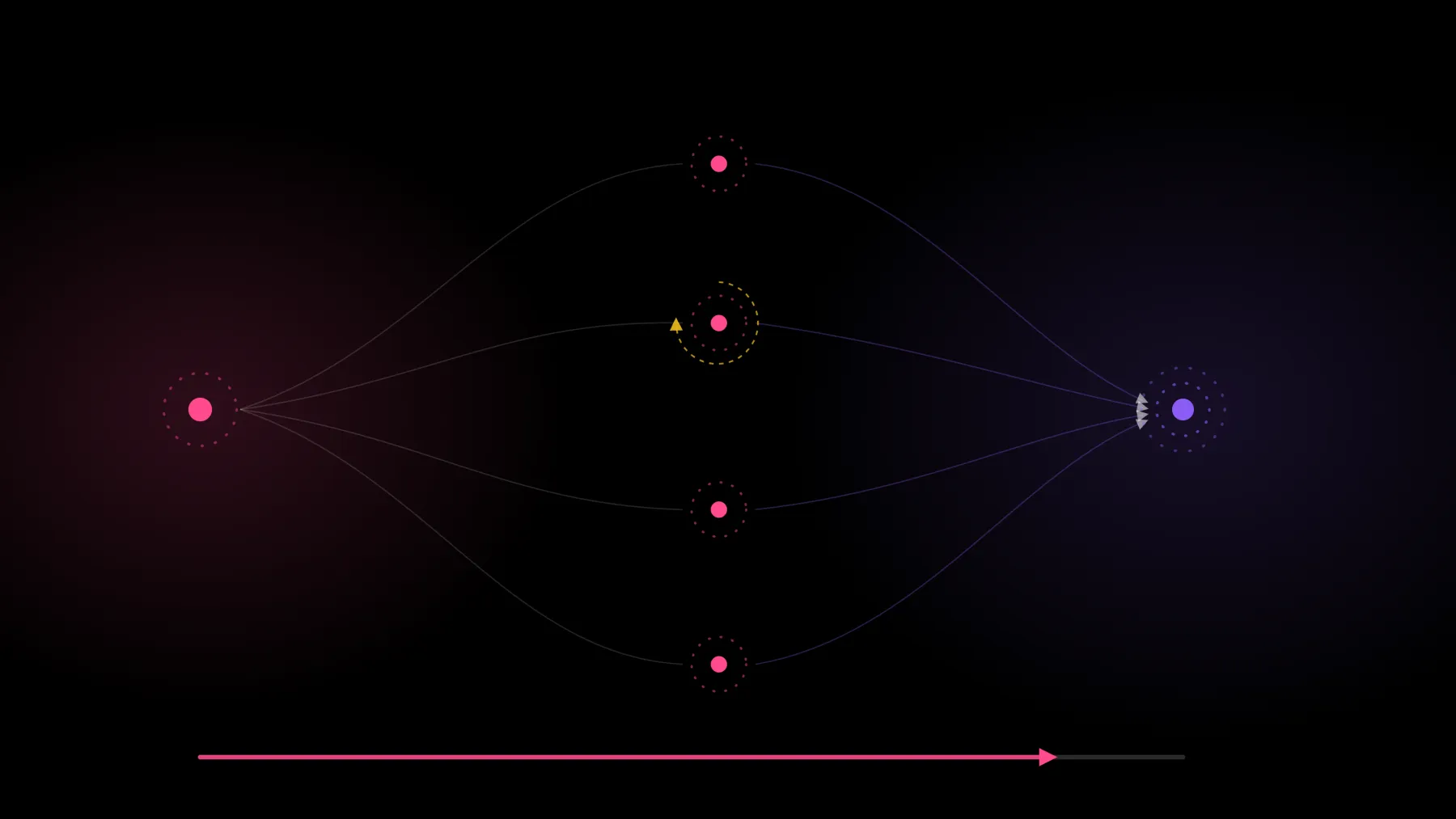
What it actually takes: a fan-out pipeline of independently retryable steps, each idempotent (i.e., an action or operation that produces the same result regardless of whether it is executed once or multiple times), each able to resume exactly where it left off, none of which double-charges the customer or double-writes a note when (not if) something fails mid-flight.
Evermuse extracts multiple built-in signal types - needs, feedback, verbatim quotes, problems, open questions - plus user-defined custom signals. Extraction runs as a choreography of queued background jobs, and every hop is designed around one assumption: it will be retried.
A few of the disciplines that make that safe:
- The cursor advances last. When the note-generation loop pulls a batch of transcript sections, feeds them to extraction, and writes the resulting notes, it marks those sections processed only after the write succeeds. A failure re-processes the same sections on the next retry - it never skips them. The progress marker is the last thing to move, always.
- Streaming, not blocking, LLM calls. The pipeline deliberately streams even workflows whose output it could simply await, because serverless platforms quietly sever long-idle connections - the workflow finishes, but the silent HTTP connection was dropped minutes earlier. This is the kind of bug you only find in production, at 2am, on your largest customer’s biggest meeting.
- Confidence that degrades honestly. When a transcript is processed in batches, the certainty about who-said-what is accumulated as a running minimum across batches - the worst-confidence batch wins. The system reports how sure it is, and it errs pessimistic. Most teams never think to track this at all.
- Idempotent billing. Credit charges are keyed on a canonical identity for each unit of work, so a replayed job can’t bill twice. Get this wrong and your retries - the thing keeping you reliable - become the thing that overcharges.
And the fan-out itself has a subtlety worth pausing on. The orchestrator reads the incoming batch once and hands each worker its payload directly, so N parallel jobs never re-read storage N times. That’s an O(N²)-to-O(N) I/O decision hiding inside what looks like a simple “process each record” loop.
Why it’s harder than it looks: the LLM call is maybe 5% of this. The other 95% is the distributed-systems discipline around it - the part that determines whether your “insights” are trustworthy or whether they silently drift as jobs fail, retry, and partially complete under real load.
3. Cleanup, sanitation, and PII: defense at every boundary
The naive version: the LLM output is clean enough. Ship it.
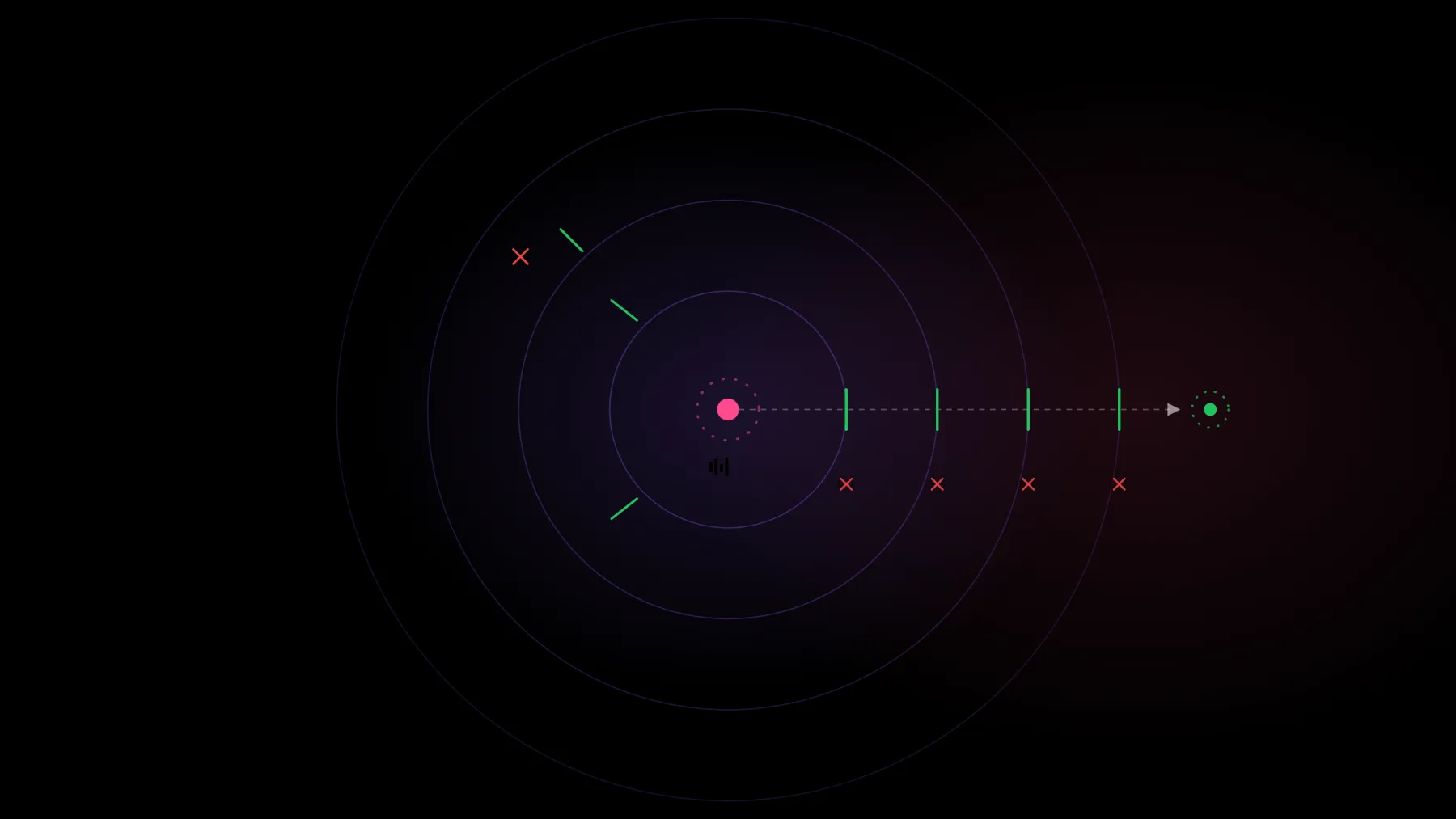
What it actually takes: treat every piece of text as hostile input, every egress point as a potential leak, and every LLM as a system you must never over-feed.
This is the least glamorous part of a cognitive layer and one of the most revealing, because it’s where you see whether a team actually operates the system or just built it.
Embedding hygiene. Every signal carries a high-dimensional embedding vector. That vector must never reach an LLM: it’s pure token bloat multiplied across every note in a meeting, it’s meaningless to the model, and it leaks internal representation. Evermuse strips it at every single egress point independently - the API layer, the data-access layer, every external tool surface, every background step. There is deliberately no single choke point. And the most sensitive paths go further: instead of removing the fields that must not leak, they name the exact fields allowed to pass - so a future schema addition can never accidentally leak, because it isn’t on the allowlist. The allowlist exists to defend against a bug that hasn’t been written yet: the engineer who adds a field in two years without knowing this code path exists.
Junk removal is a judgment call, made safely. “Junk” isn’t a regex (i.e., a sequence of characters that forms a specific search pattern). A note is junk if it’s attributed to the facilitator rather than the customer, if it’s malformed, if it’s off-topic, or if it’s not actually supported by the transcript. Evermuse hands this judgment to an LLM workflow - but gives the model the full transcript so it can verify accuracy against source, requires its answers in disjoint buckets, and then only deletes notes that appear in both the model’s response and the batch that was sent. The LLM can’t cause the deletion of something that wasn’t in front of it. And if cleanup fails after all retries, the meeting is deliberately moved to completed rather than left stranded mid-pipeline - because a data-hygiene step failing shouldn’t hold a customer’s meeting hostage forever.
PII and prompt-injection. Error telemetry is scrubbed before it leaves the system - sensitive keys redacted, emails and IPs partially masked with guards against the edge cases where masking itself would leak. Structured logs go further and drop content-bearing fields entirely rather than mask them. The ingestion contract itself carries a declared PII assessment for every source. And any user-controlled text interpolated into a prompt runs through a single, shared, audited sanitizer - the one place the codebase does centralize, precisely because prompt-injection defense benefits from a single implementation everyone trusts.
Why it’s harder than it looks: none of this shows up in a demo. All of it shows up in an incident. The recurring theme - defense re-asserted at every boundary rather than trusted once at a chokepoint - is exactly the kind of thing you only build after you’ve been burned, and exactly the kind of thing a “we’ll build it in a sprint” plan omits entirely.
4. Clustering and pattern-finding: the LLM proposes, the guardrails dispose
The naive version: embed the notes, run k-means (i.e., an unsupervised machine learning algorithm that groups unlabeled data into a defined number (K) of clusters), name the clusters with an LLM.
What it actually takes: clustering that doesn’t force noise into groups, an LLM refinement pass that narrows statistical clusters into human-meaningful themes, and a rendezvous mechanism so parallel clustering jobs trigger the next stage exactly once.
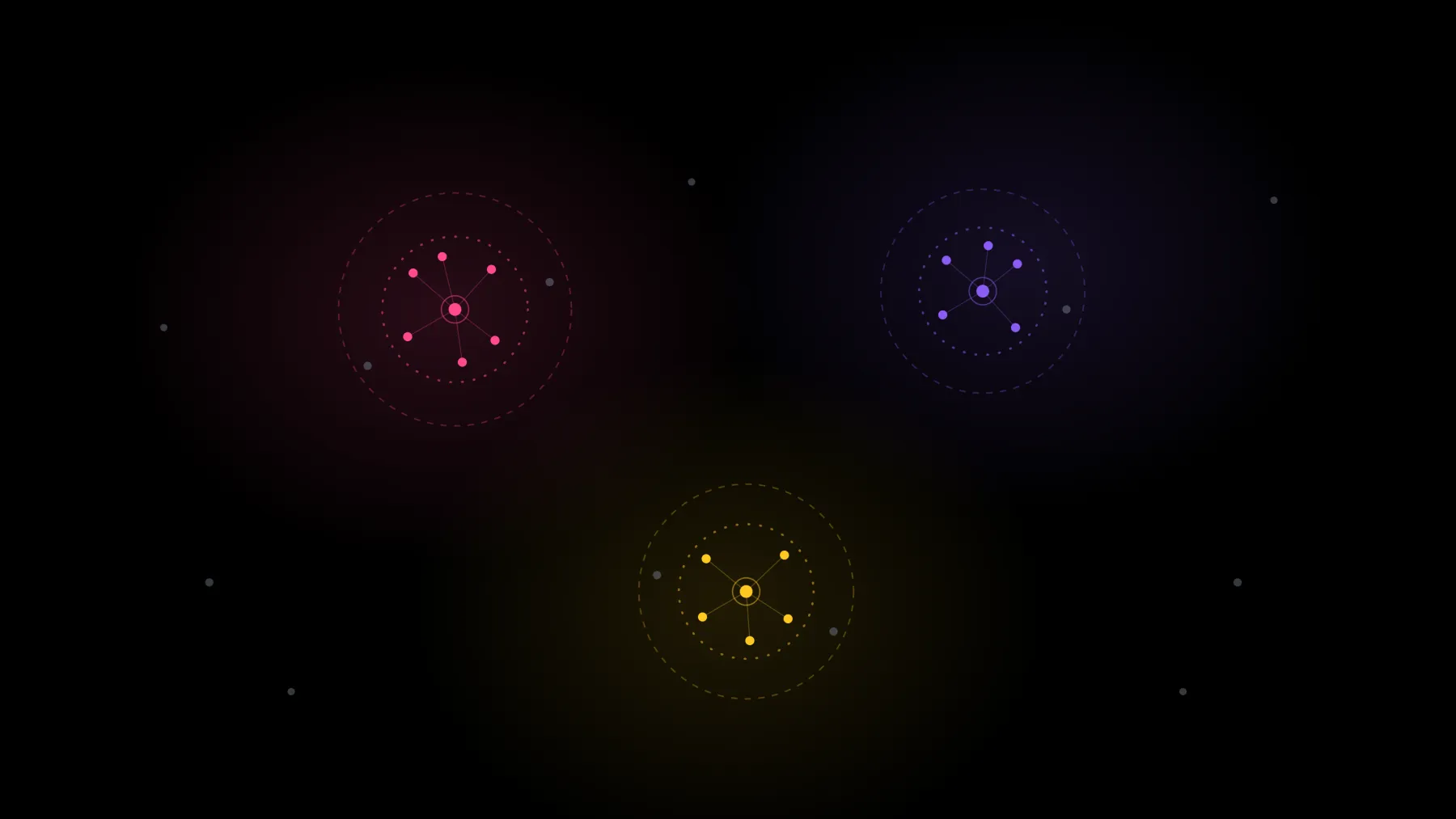
Evermuse clusters in three stages: a planner fans out work per scope and per signal type; a dedicated service runs density-based clustering - chosen specifically because it discards genuine noise as noise rather than jamming every point into the nearest group; and a validation pass runs each statistical cluster through an LLM workflow that returns an umbrella theme plus the subset of notes that are actually the same theme. Statistics propose; the LLM disposes. Only the narrowed subset becomes a cluster; the rest are dropped.
The engineering that makes this survivable:
- Full recompute, atomically. Each run replaces the existing clusters for a scope inside a single retryable step, so a retry replays the whole swap - never a half-updated state.
- The rendezvous. A single ingested meeting fans out to many scopes times several note types. Each parallel job sets an in-flight marker; only when all markers clear does the downstream stage - categorization, roadmap generation - fire, once. Coordinating “all parallel jobs done → trigger next thing exactly once” across a distributed queue is a genuinely hard problem, and it’s invisible until you get it wrong and your roadmap regenerates five times per meeting.
- Size-limit engineering everywhere. Embeddings are large and queue payloads are hard-capped. The clustering service fuses fetch-and-cluster into one step to avoid serializing vectors between steps; the orchestration side projects notes down to the minimal shape each stage needs. These aren’t premature optimizations - they’re the difference between the pipeline running and the pipeline throwing payload-too-large under real data volume.
Categorization adds the continuous-learning wrinkle. Categories aren’t a fixed taxonomy - the workflow invents category names from the notes each run. But the code enforces discipline the LLM can’t: a category needs minimum support to survive (singletons collapse into a catch-all), a run that fails to categorize enough of its input is rejected wholesale and writes nothing, and partial LLM failures degrade gracefully into the catch-all rather than aborting. The intelligence is in the workflow; the trustworthiness is in the guardrails around it.
5. Suggestion generation and product spec: compounding, not recomputing
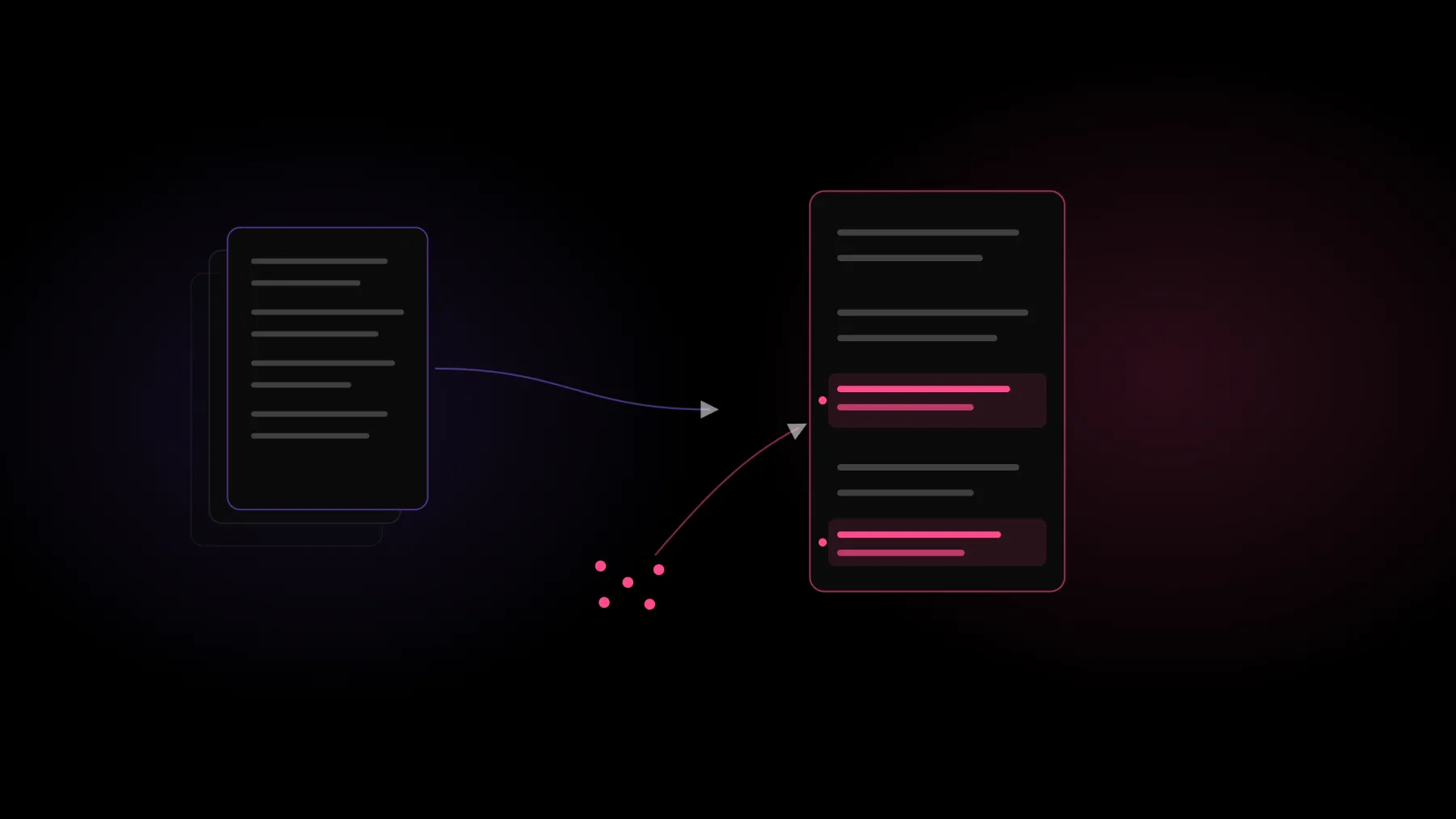
The naive version: every time you want a roadmap, feed all the notes to an LLM and ask for opportunities.
What it actually takes: an incremental system that folds new evidence into a prior understanding, so the output gets richer over time instead of being re-hallucinated from scratch on every run.
This is where the “cognitive layer that compounds” claim becomes concrete, and it shows up in two places.
Product spec distillation maintains a living spec per product by repeatedly folding each new meeting into the previous spec - an incremental diff-and-merge, not a re-derivation from all transcripts. Meetings are processed strictly one at a time, and the spec is re-fetched at the start of each iteration so meeting N distills against the spec that meeting N-1 produced. The whole thing is serialized to one run per product, because two concurrent runs would race on “old spec → new spec” and corrupt the accumulation. Spec history is preserved rather than overwritten. The system’s understanding of your product grows with every conversation.
Roadmap generation does the same trick with evidence. It only fetches signals that are new since the last run - including a genuinely subtle edge case: signals attached to meetings that were reassigned to this product after the last run, whose notes predate it. Then it feeds the new evidence and the existing roadmap to the workflow, which returns the reconciled whole - folding new signals into existing opportunities or adding new ones. Dedup-across-runs is delegated to the model by always handing it the prior state. And if there’s no new evidence, it does nothing. No recompute without new information.
The provenance here is the part that earns trust. Every generated opportunity carries an explicit evidence list - the exact notes supporting it, connected to their meetings and timestamps so the UI can deep-link to the transcript moment. On read, the system self-heals: it checks every cited note, detects any that were deleted, strips them, and writes the cleaned version back - so a suggestion never dangles to evidence that no longer exists. Separately, the system counts distinct customers asking for each opportunity, recomputed whenever meeting-to-customer links change. “How many different customers want this” is a scoring signal you cannot fake and most teams never build.
Why it’s harder than it looks: the naive “re-run over everything” version is not just expensive - it’s incoherent, producing a different roadmap every run because the LLM re-imagines it from scratch each time. Stable, compounding output requires feeding prior state back in, and that requires all the idempotency, ordering, and concurrency discipline that makes “just call the LLM” into a real system.
6. Competitor capabilities: the freshness and dedup problem
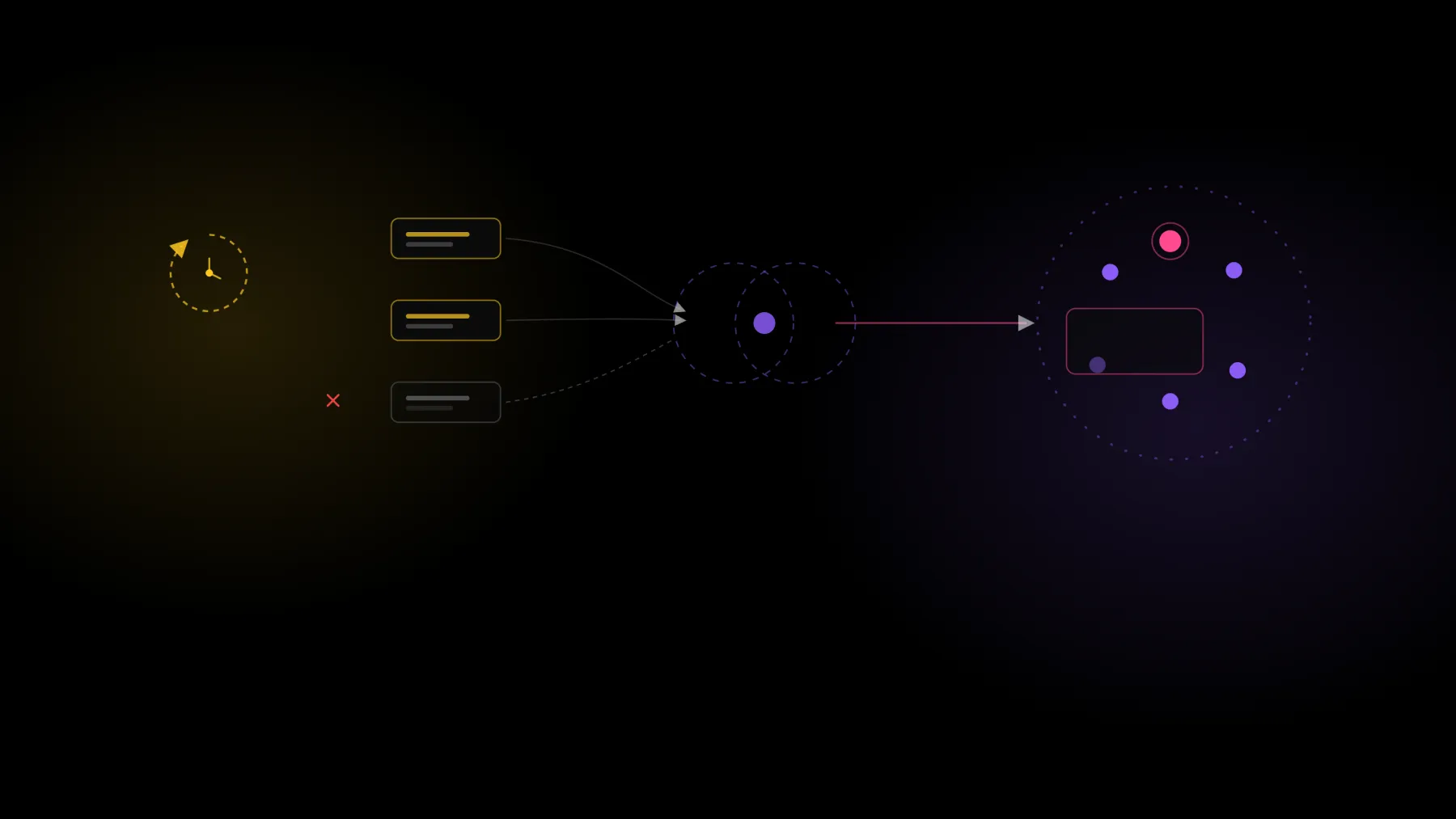
The naive version: ask an LLM “who are X’s competitors and what do they do.”
What it actually takes: a data model that separates your opinion of a competitor from the facts about them, semantic dedup against hallucinated repeats, and a scheduled crawl that keeps capabilities current without logging the same launch five times.
Evermuse splits competitors into workspace-scoped opinions (threat level, similarity, segment) and a global registry of the real-world companies themselves - because many workspaces track the same competitor, so capabilities and news are gathered once and shared. Discovery passes the already-known competitor list into the workflow so it doesn’t re-propose duplicates.
The freshness engine is a scheduled pipeline that fans out one throttled job per unique competitor, handing the workflow that competitor’s already-known capabilities so it can identify what’s genuinely new. The critical guard: every new capability is embedded and checked for semantic proximity against existing ones before writing - a similarity check that catches the same launch reappearing across articles with slightly different wording. Without it, the same “Competitor X ships AI summaries” event gets logged every crawl cycle and your competitive intel becomes noise.
This all feeds the same provenance-tagged search stream as customer evidence - competitor capabilities and news are context, customer signals are evidence, your spec and shaping notes are guidance. Which is exactly the three axes a gap analysis needs: what customers want vs what we’ve decided vs what competitors ship. The classification you made at ingestion (Section 1) is what makes the strategic query at the end coherent.
7. The MCP surface: where “approximately right” becomes unacceptable
Now the part that the “most users consume this via Claude/ChatGPT” framing makes central. The MCP server is the product for most users. And serving a cognitive layer to an LLM client you don’t control imposes constraints a web app never faces.
It’s stateless, and that forces everything interesting. No long-lived session. Successive tool calls in one chat turn can land on different server instances. So conversational state is persisted and reloaded per request, and the server refuses session-dependent modes outright - statelessness as a contract, not an accident. Every scope identifier the LLM supplies is re-validated against the workspace pinned by the credential - the LLM is never trusted to scope its own access.
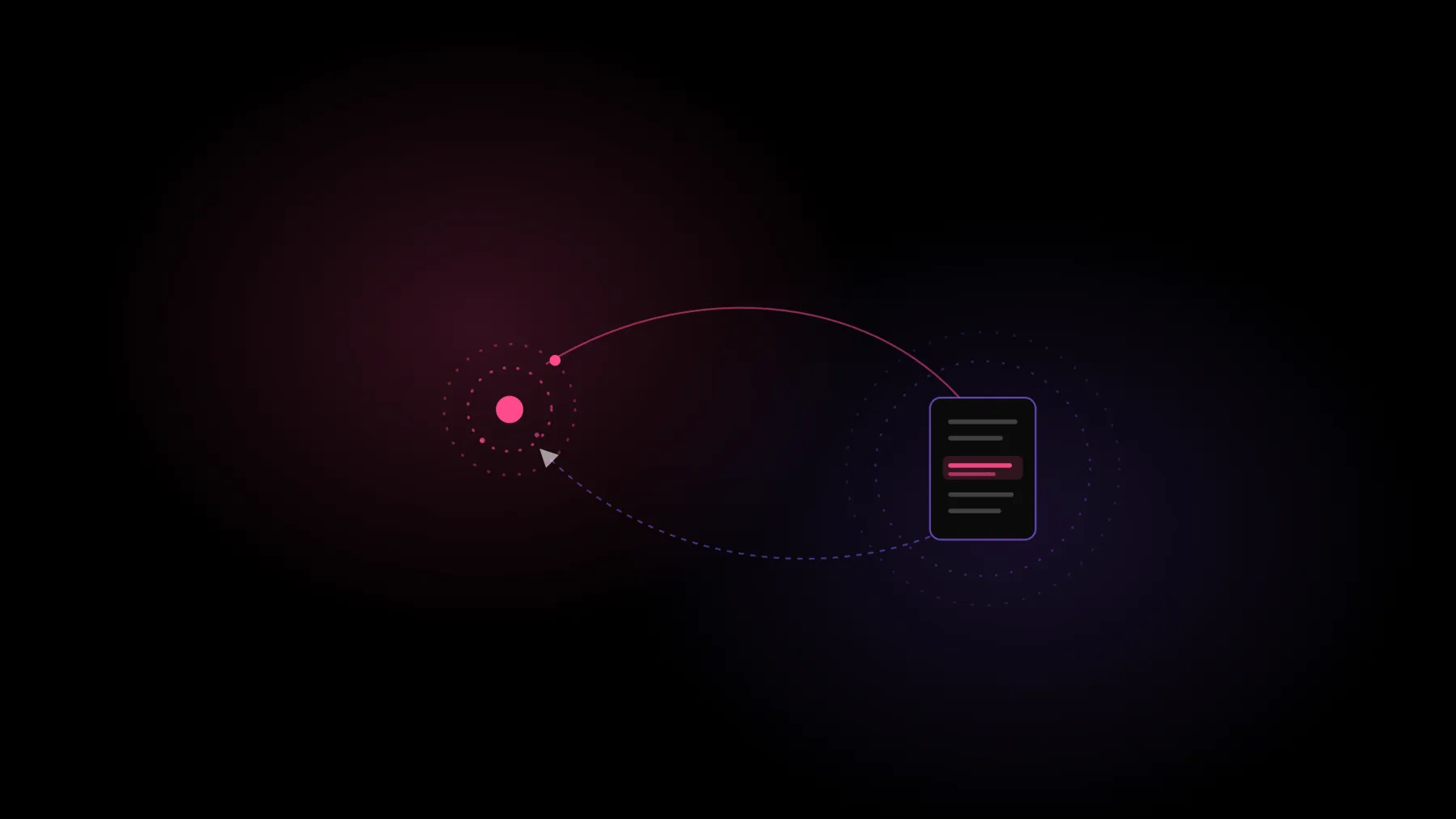
The citation layer is the centerpiece, and it’s a closed loop, not decoration. This is the single hardest thing in the whole system to get right, and the thing most in-house builds skip.
The requirement: an external LLM makes a claim; a human must be able to click through and verify it against the actual record. Evermuse solves it with two cooperating mechanisms:
- Stable footnote markers. Every citable item gets a footnote marker whose index must be globally unique and monotonic across all tool calls in one chat turn - despite the server being stateless. You can’t keep a counter in memory, so uniqueness is guaranteed by an atomic reservation scheme: each tool call reserves a contiguous block of indices in a single transactional operation, coordinated across server instances. One reservation per tool call, not per item.
- Resource links. Every item also gets a terse deep link straight to the underlying signal, transcript moment, meeting, or opportunity - terse specifically to save tokens in heavy search payloads - emitted both inline and as first-class MCP resource links, so both citation-aware and text-only clients get grounding.
Both the marker and the link are derived from the item’s real database identity. When a user drills into a citation, the lookup re-resolves that exact record through workspace-guarded access paths and re-validates ownership. The claim is always one hop from its verifiable source. This is the difference between a system you can trust with a board deck and a system that hallucinates authoritatively about your customers. Building it requires solving distributed unique-ID allocation on a stateless server - which is not on anyone’s “we’ll build it in a sprint” list.
Agentic skills and subagents. The server can spawn a research subagent for context-heavy work - reviewing a full transcript, researching across the user’s other connected MCP servers. The subagent gets its own bounded toolset, and its results channel is designed so that submitting findings terminates the loop - and the submission schema forces every finding to carry the IDs of its supporting evidence. Citation discipline propagates into the subagent’s output by construction. Recursion is bounded, steps are capped, there’s a hard timeout, and usage is recorded idempotently, with failed charges retried durably rather than leaked.
Dynamic tool discovery lets Evermuse proxy to the user’s other MCP servers: it indexes remote tools semantically, finds the right tool for a query, and proxies the call - with token refresh serialized per connection so concurrent calls can’t invalidate each other’s credentials, and binary blobs replaced with placeholders rather than dumped raw into the model’s context.
The safety envelope is uniform. Every tool call, before it runs, passes through one gate: workspace membership, credit balance, permissions, and an affordability pre-check - the cost is known up front, so the system never delivers a paid call it can only partially charge. Then citations and links are applied. Then - only on success - credits are billed. Every tool inherits the same envelope because it’s applied in one place, not re-implemented per tool.
Why it’s harder than it looks: the MCP tools are the easy part - anyone can expose search. The hard part is everything wrapped around them: stateless session management, distributed citation allocation, per-request re-authorization of an untrusted client, result-size budgeting to fit a context window, and a subagent system that stays bounded in recursion, cost, and context. That’s the machinery that makes an LLM-facing surface trustworthy, and it has no analog in a normal web backend.
8. The part that compounds: why this is a moat, not a feature

Step back and notice what all of this shares. It isn’t the LLM calls - those are commodities, a prompt anyone can copy. It’s the layer around them that turns disconnected model outputs into an understanding that accumulates:
- Provenance tagging at ingestion, so evidence never blends with guidance.
- Idempotent extraction, so retries make the system more reliable instead of corrupting it.
- Defense at every egress boundary, so hygiene doesn’t decay as the code changes.
- LLM-proposes-guardrails-dispose clustering and categorization, so patterns are meaningful and a bad model run can’t destroy good data.
- Incremental spec and roadmap generation that folds new evidence into prior state, so output is stable and compounding rather than re-hallucinated.
- Semantic dedup on competitor intel, so freshness doesn’t become noise.
- A closed citation loop, so every claim is one click from its source.
Each of these is individually buildable. That’s the trap - every piece looks like a sprint. The difficulty is that they have to be built together, they have to be correct together, and the value only appears after months of evidence has accumulated through a system that got all of them right the whole time. A cognitive layer isn’t a feature you ship; it’s an invariant you maintain across every ingestion, every extraction, every retry, for years. The moat isn’t the code - it’s the accumulated, correctly-tagged, fully-cited understanding that a system with any of these pieces wrong would have quietly poisoned long ago.
9. An honest way to decide
There are teams that should build this. If customer-evidence infrastructure is your product - if this layer is the business you’re in, staffed like a business - build it, and treat this article as a map of the potholes. Nothing above is secret; it’s just expensive to learn firsthand.
For everyone else, the build-vs-buy question comes down to three costs, and only two of them are the ones teams usually count.
The cost you can estimate. Look back at what you just read: seven interlocking subsystems, each with its own failure modes, each individually plausible as “a sprint.” Together they are quarters of senior engineering - and that gets you to the starting line, not to parity with a system that’s been accumulating scar tissue in production.
The cost that never ends. A distributed, continuously-learning pipeline is an operational commitment, not a codebase. Someone owns the 2am retry storm, the payload-too-large regression, the prompt-injection report - indefinitely. And internal tools like this rarely get killed when they underdeliver; they get a reluctant part-time maintainer, which is how a “sprint project” becomes a permanent tax on your best engineer.
The cost you can’t recover. This is the one that should decide it. Engineering time is replaceable. Last quarter’s customer conversations are not. Every month your evidence flows through a pipeline that blends guidance into evidence, drops citations, or silently strands documents, you’re accumulating a corpus you will eventually have to distrust - and you cannot re-run those calls. The compounding that makes a cognitive layer valuable only works if the system was right the whole time, including at the beginning, when in-house systems are at their most wrong.
That’s the real trade. Not “hard vs. easy” - engineers rightly ignore that argument - but where the quarters go and what accumulates while they pass. One path: your team spends the next several quarters earning the invariants above, while the evidence piling up in the meantime is tagged by v0.1 of your pipeline. The other: correctly-tagged, fully-cited understanding starts compounding from week one, and your engineers spend those same quarters on the product only they can build.
You can build this in-house. But now you know what “this” is. It’s not a transcript summarizer with a nice UI. It’s a distributed, continuously-learning, self-verifying system whose hardest requirements - provenance, idempotency, and verifiable citation - are precisely the ones that never appear in the demo and always appear in the incident.
The demo is easy. The demo is always easy. The cognitive layer is the rest.
This piece describes the architecture of Evermuse as built. Every mechanism above - the three-way provenance model, the cursor-advances-last extraction loops, the allowlist-based embedding hygiene, the propose-and-dispose clustering, incremental spec distillation, semantic competitor dedup, and the distributed citation allocator - is a real component of the running system, described here at the level of design rather than implementation. The specifics are ours; the lessons are yours.